
Do you feel tired even when you haven’t done much physically?
Sometimes the body is resting, but the mind is still working.
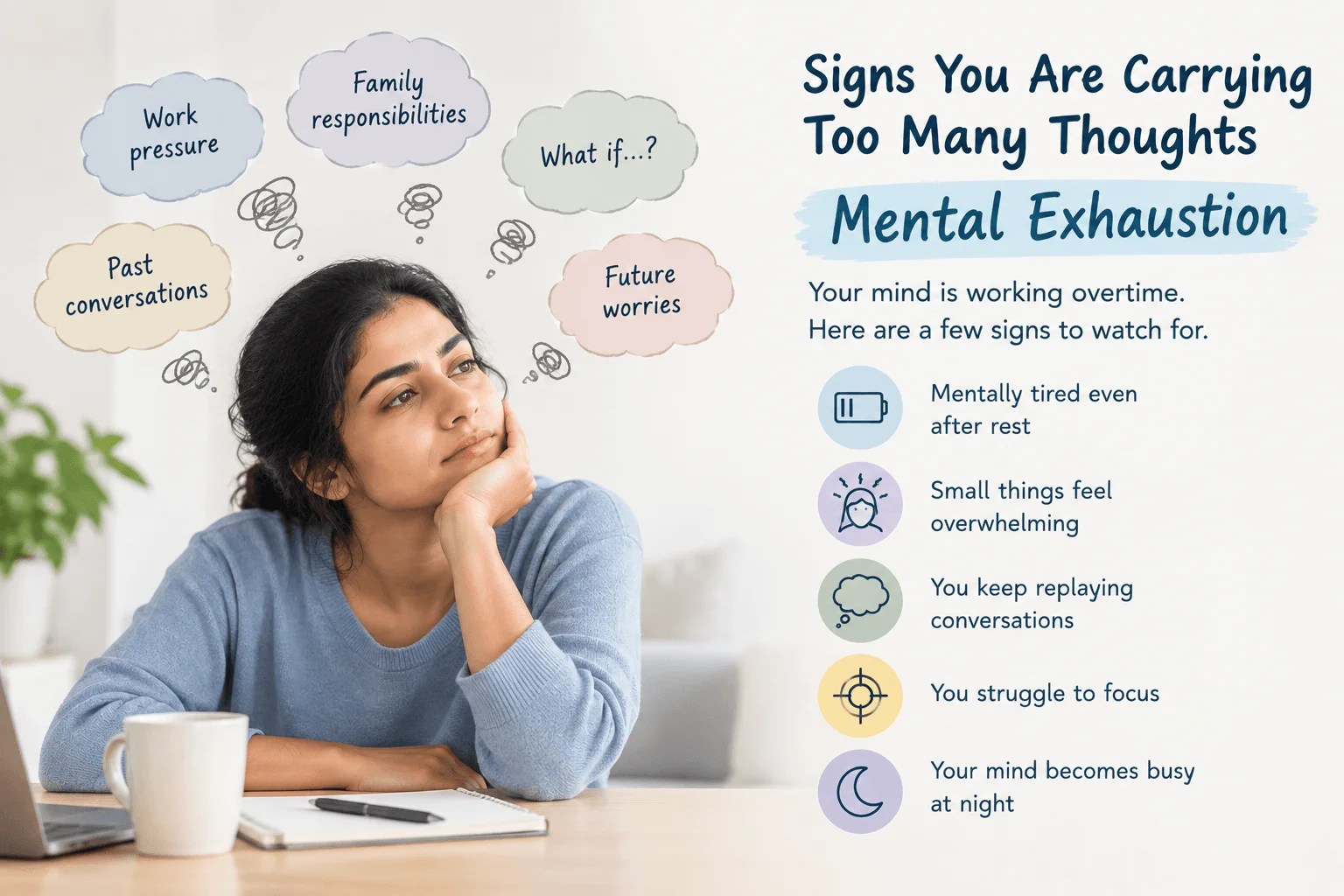
You are thinking about work, family, responsibilities, past conversations, future problems, and things you haven’t even decided yet.
When too many thoughts keep demanding your attention, you may begin experiencing mental exhaustion.
What Is Mental Exhaustion?
Mental exhaustion is a state of feeling mentally drained, overwhelmed, or unable to concentrate because your mind has been dealing with too many demands for too long.
It isn’t always caused by one big problem.
Sometimes, it is the accumulation of many small thoughts that continuously occupy your attention.
5 Signs You May Be Carrying Too Many Thoughts
1. You Feel Mentally Tired Even After Rest
You may sleep or take a break, but still feel like your mind hasn’t rested.
You are physically still, but mentally you are constantly processing something.
2. Small Things Feel Overwhelming
A simple task, message, or conversation may suddenly feel difficult.
When your mental space is already crowded, even small additional demands can feel exhausting.
3. You Keep Replaying Conversations
You may repeatedly think:
“Why did I say that?”
“What did they mean?”
“I should have responded differently.”
The conversation has ended, but your mind keeps returning to it.
4. You Struggle to Focus
You start one task but your mind jumps to another.
You think about tomorrow while working today.
Your attention keeps moving between different concerns instead of staying with what is in front of you.
5. Your Mind Becomes Busy at Night
The moment you lie down, your thoughts become louder.
Tomorrow’s responsibilities, yesterday’s problems, and imaginary future situations all appear at once.
You are tired—but your mind keeps going.
Why Does This Happen?
Not every thought needs to be solved.
But when we repeatedly think about something without taking useful action, it can become mental rumination.
For example:
Useful thought:
“I need to prepare for tomorrow’s meeting.”
Action:
Prepare the presentation.
Unnecessary repetition:
“What if the meeting goes badly? What will they think? What if I forget something?”
The second pattern consumes mental energy without necessarily moving you forward.
A Simple Thought Management Check
When you feel mentally exhausted, pause and ask:
“What thoughts are taking up most of my mental space right now?”
Then ask:
“Which of these thoughts actually need my attention?”
If a thought requires action, identify the action.
If it doesn’t require action right now, you can practice blanking the unnecessary thought and redirecting your attention.
You don’t need to solve everything at the same time.
Give Your Mind Some Space
Mental clarity doesn’t always come from thinking more.
Sometimes, it comes from knowing when to stop continuing an unnecessary thought.
Notice the thought.
Check whether it is useful.
Take action when necessary.
And when there is nothing useful to do, blank and redirect.
Remember:
You may not be tired because you are doing too much. Sometimes, your mind is simply carrying too many thoughts.
Learning to manage those thoughts can help create more mental space, clarity, and focus.